Bay Islands Honduras: Best Diving Hotels in Roatán, Utila & Guanaja
Find the best dive-friendly hotels in Honduras's Bay Islands. From Roatán's reef resorts to Utila's budget dive lodges and Guanaja's remote escapes.
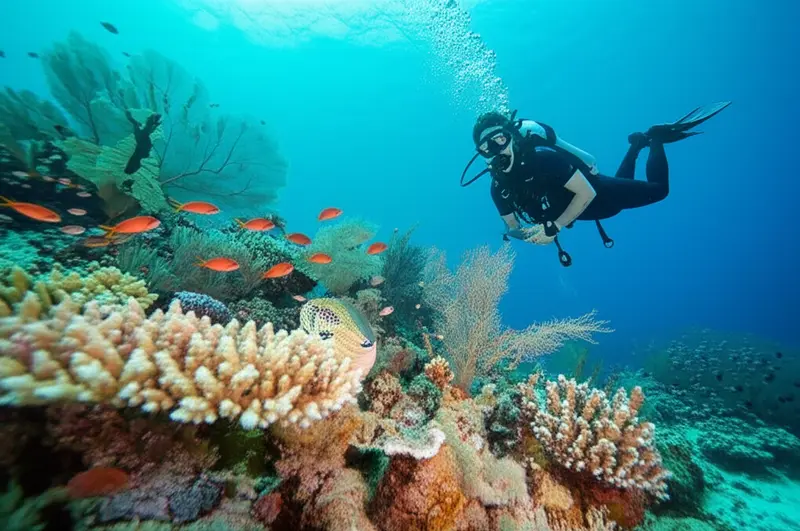
Table of Contents
The Bay Islands: The Caribbean's Affordable Diving Capital
Off the northern coast of Honduras, the Bay Islands archipelago sits atop the Mesoamerican Barrier Reef — the same reef system that runs from Mexico's Yucatán to Honduras, making it the second-largest in the world. This geological gift means that Roatán, Utila, and Guanaja offer some of the planet's most accessible and affordable world-class diving, with hotel options ranging from barefoot budget to genuine luxury.
What makes the Bay Islands special isn't just the diving — it's the value proposition. A PADI Open Water certification here costs $250-350 USD (versus $500+ in most Caribbean destinations). Hotels with direct reef access, included breakfast, and dive shop partnerships can be found for $50-150 per night. And the reef itself is in excellent condition, protected by a marine park system that has kept development in check.
Roatán: The Accessible All-Rounder
Roatán is the largest and most developed of the Bay Islands, with a paved road running its 60-kilometer length, an international airport (RTB) receiving direct flights from Houston, Miami, Dallas, and Atlanta, and a range of accommodation from backpacker hostels to full-service resorts. The island's western end is the most developed, while the eastern half remains wild and sparsely populated.
West End and West Bay
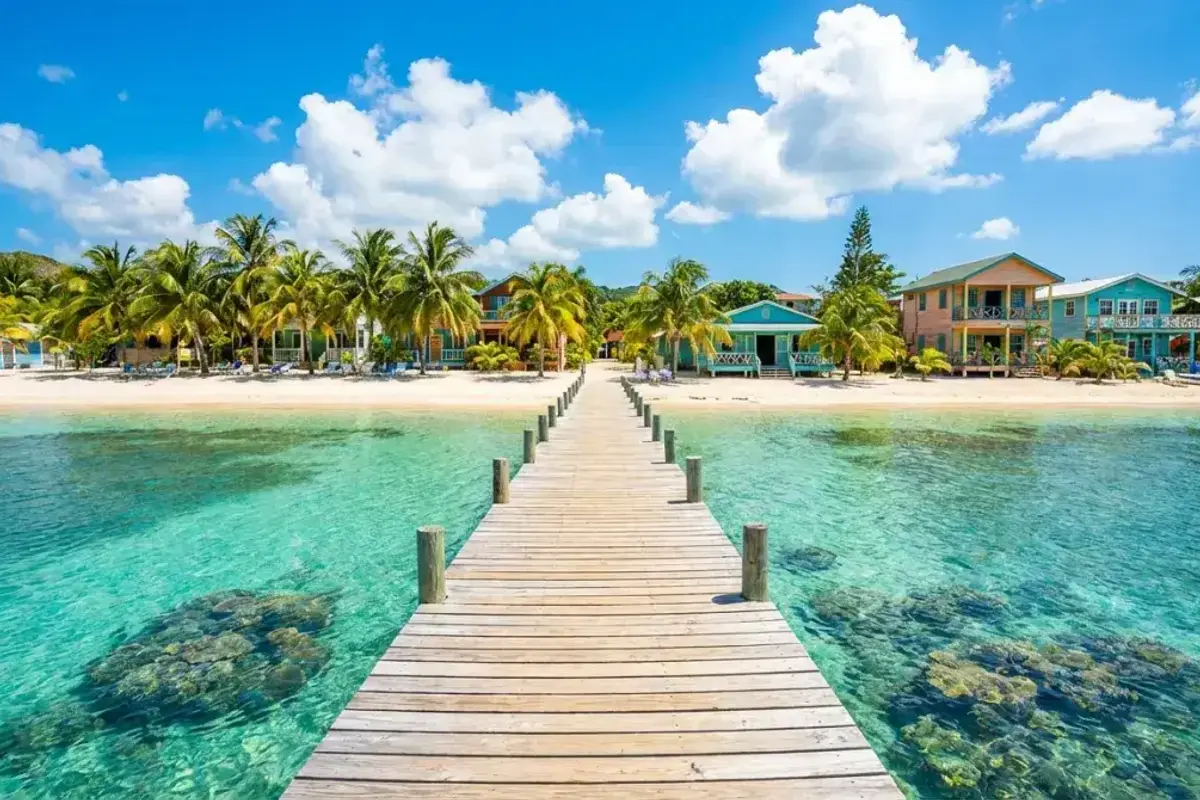
The twin communities of West End and West Bay form Roatán's tourism epicenter. West End is a walkable village strung along a single sandy road, with dive shops, restaurants, and bars interspersed between modest hotels and vacation rentals. West Bay, a kilometer south, features the island's most photographed beach — a crescent of white sand backed by palms.
For divers: West End is the better base. The reef is just 30-100 meters offshore, and half a dozen dive shops compete for your business with competitive pricing and small group sizes. Many hotels include dive packages or have on-site shops. Shore diving is possible at several points, meaning you're not dependent on boat schedules.
For beach lovers: West Bay offers the more conventional beach resort experience. The sand is finer, the water calmer, and the hotels larger. A water taxi connects West Bay to West End in 5 minutes, so you can have both the beach by day and the village atmosphere at night.
Sandy Bay
Between West End and the main town of Coxen Hole, Sandy Bay offers a quieter alternative with excellent snorkeling. The Roatán Institute for Marine Sciences and the Carambola Botanical Gardens are here, making it a good choice for nature-focused travelers. Hotels tend to be mid-range, with more space and lower prices than West End.
The East End
Roatán's eastern half — from French Harbour through Oak Ridge to Camp Bay — is where you go to escape the tourist trail. Accommodation is sparser but more unique: overwater bungalows, jungle hillside lodges, and family-run guesthouses in stilted fishing villages. The diving here is less trafficked, and sites like Mary's Place (a dramatic swim-through fissure) and the Odyssey wreck draw experienced divers.
Roatán Hotel Price Guide
- Budget: $30-60/night — basic rooms in West End, fan-cooled, shared or private bath
- Mid-range: $60-150/night — AC rooms with pool access, dive packages available
- Upscale: $150-350/night — beachfront resorts, full dive centers, spa facilities
- Luxury: $350+/night — exclusive east-end properties, overwater villas
Utila: The Backpacker Diver's Paradise
Utila is small (just 42 square kilometers), flat, and almost entirely focused on one thing: diving. This tiny island punches absurdly above its weight in the dive world, offering some of the cheapest PADI certifications on the planet and a legitimate chance to swim with whale sharks (the world's largest fish) from March to May and September to December.
The Town
Nearly all of Utila's accommodation, restaurants, and dive shops cluster in the main town at the island's eastern end. The vibe is distinctly backpacker-bohemian — think reggae bars, hammock-strung hostels, and dive shops that feel like clubhouses. But the scene has matured in recent years, and you'll now find quality mid-range options alongside the budget spots.
Choosing a Dive Shop (and Hotel)
On Utila, your dive shop choice often determines your accommodation. Many shops offer free or heavily subsidized lodging when you book dive courses or packages. This "stay and dive" model means you'll often book a dive course first, then receive accommodation as part of the deal. The quality of included lodging varies — inspect rooms before committing if possible.
For those who prefer to separate diving from sleeping, independent hotels and guesthouses have improved significantly. You can now find comfortable private rooms with AC, reliable WiFi, and actual hot water — amenities that were rare on Utila a decade ago.
The Cayes
Utila's offshore cayes (small islands) offer a radically different experience: remote, rustic, and surrounded by some of the reef's best diving. Water Caye and Jewel Caye have basic to mid-range accommodations accessible by short boat rides from the main island. These spots are ideal for travelers who want genuine island isolation — no cars, no nightlife, just reef and relaxation.
Utila Hotel Price Guide
- Budget/Dive package: $15-35/night (or free with courses)
- Mid-range independent: $40-90/night — private AC rooms, hot water
- Upscale (rare): $90-180/night — boutique waterfront properties
Guanaja: The Untouched Third Island
Guanaja is the Bay Islands' best-kept secret. Mountainous, densely forested, and virtually untouched by mass tourism, this island offers arguably the best diving in Honduras to those willing to make the effort to get there. The reef is pristine, the fish life abundant, and you'll likely have dive sites entirely to yourself.
Getting There and Getting Around
Guanaja has a small airstrip served by local flights from La Ceiba and Roatán. There are no roads on the main island — transportation is entirely by boat. The main settlement, Bonacca (locally called "the Venice of Honduras"), is a tiny town built entirely over water on a cay just offshore. This logistical remoteness is both Guanaja's challenge and its greatest asset.
Accommodation on Guanaja
Hotels on Guanaja are few and tend toward the eco-lodge model: small properties (5-15 rooms) set in forested hillsides or on the waterfront, often with their own dive operations. All-inclusive packages are common and recommended, as dining options outside hotels are extremely limited.
What you get: Pristine diving with zero crowds, genuine Robinson Crusoe atmosphere, some of the healthiest coral in the Caribbean, hiking through Caribbean pine forest to waterfalls, and the authentic Bay Islands culture that existed before tourism.
What you give up: Nightlife, restaurant variety, easy access, last-minute flexibility. Guanaja is a commitment — plan and book in advance.
Guanaja Hotel Price Guide
- Mid-range eco-lodge: $100-200/night (often all-inclusive with diving)
- Upscale all-inclusive: $200-400/night — premium dive packages, gourmet meals
Diving Conditions Across the Bay Islands
Water temperature: 26-29°C (79-84°F) year-round. A 3mm shorty wetsuit is plenty; many divers go with just a rash guard.
Visibility: Typically 20-40 meters. Best from March to September. Plankton blooms during whale shark season can reduce visibility on some sites but bring the megafauna.
Current: Generally mild, making the Bay Islands suitable for all certification levels. Some advanced sites (particularly around Utila's north side) can have stronger currents.
Marine life highlights: Whale sharks (seasonal), hawksbill and loggerhead turtles, spotted eagle rays, nurse sharks, moray eels, seahorses, splendid toadfish (endemic to the region), and extraordinary coral diversity including massive barrel sponges and pristine elkhorn coral.
How to Choose Your Island
Choose Roatán if: You want the most options (accommodation, dining, activities), need easy international flight access, are traveling with non-divers who want beach time, or prefer a mix of diving and other activities.
Choose Utila if: You're on a budget, getting certified for the first time, chasing whale sharks, enjoy backpacker social culture, or want to maximize dives per dollar.
Choose Guanaja if: You're an experienced diver seeking pristine and uncrowded sites, value solitude and nature over nightlife, don't mind limited logistics, or want to see the Bay Islands as they were before tourism.
The multi-island approach: With inter-island flights (Roatán-Utila in 15 minutes, Roatán-Guanaja in 20) and ferry services (Roatán-Utila daily, 1 hour), combining two islands in a single trip is very doable. A common itinerary: fly into Roatán for 3-4 days, ferry to Utila for 3-4 days, return to Roatán for the flight home.
Booking Tips
Dive + hotel packages almost always offer better value than booking separately. Contact dive shops directly for package quotes — prices on booking platforms often don't include dive deals.
High season (December–April and June–August) means higher prices and fuller boats. Book 2-4 weeks ahead for Roatán, 1-2 weeks for Utila. Guanaja should always be booked well in advance due to limited capacity.
Cancellation flexibility varies widely. The Bay Islands' dive industry runs on small margins — understand cancellation policies before booking, especially for multi-day courses.
Getting there: Roatán has direct international flights. For Utila and Guanaja, fly to Roatán or La Ceiba and connect by ferry (Utila) or local flight (Guanaja). From Tegucigalpa or San Pedro Sula, domestic flights to Roatán and La Ceiba are frequent and affordable.
The Bay Islands prove that world-class diving doesn't require a world-class budget. Whether you're a first-timer getting certified on Utila, a resort diver exploring Roatán's wall, or an adventurer seeking Guanaja's empty sites, these islands deliver underwater experiences that rival destinations costing three times as much.

About the Author
Hotels CA TeamEditorial Research Team
Hotels CA Team is the editorial desk behind these Central America hotel and travel guides. We research public property information, official sources, and traveler feedback. A hotel page is not a personal visit unless the article says so.