Best Eco-Lodges in Central America for Sustainable Travel
Discover the top eco-lodges across Central America, from jungle retreats to beachfront sanctuaries.
Contents
Central America is one of the most biodiverse regions on the planet — a slender ribbon of land that packs in cloud forests, volcanic lakes, coral reefs, and untouched jungle within a few hours' drive. It's also home to a thriving eco-lodge scene that puts sustainability at the center of the experience, not as an afterthought. Whether you want to wake up to howler monkeys in Costa Rica, kayak through mangroves in Belize, or sip locally grown coffee on a misty hillside in Guatemala, Central America delivers.
We've rounded up 10 of the best eco-lodges across all 7 countries — places that walk the talk on conservation, support local communities, and offer unforgettable experiences in some of the wildest corners of the region.
1. Pacuare Lodge — Costa Rica
Location: Pacuare River, Limón Province, Costa Rica
Price Range: $550–$750 per person per night (all-inclusive)
Perched on the banks of one of the world's top whitewater rivers, Pacuare Lodge is accessible only by raft or a small aerial tram — and that sense of arrival sets the tone for everything that follows. The lodge sits inside a private 1,000-acre rainforest reserve, and its 20 thatched-roof bungalows blend seamlessly into the jungle canopy.
Sustainability practices: Pacuare runs entirely on hydroelectric power from the river. It employs 95% local staff from nearby indigenous Cabécar communities and has partnered with them to protect ancestral lands from deforestation. Food is sourced from on-site gardens and local farms.
Best activities: Class III–IV whitewater rafting, night wildlife walks, zip-lining through the forest canopy, and birdwatching (over 300 species recorded on the property).
How to get there: Fly into San José (SJO), then transfer by van to Tres Equis (~2.5 hrs), where you board a raft downriver to the lodge. Transfers are included in most packages.
2. Ix Chel Tropical Research Farm — Guatemala
Location: Near Lanquín, Alta Verapaz, Guatemala
Price Range: $80–$150 per night
Tucked into the lush highlands near the famous Semuc Champey natural pools, this family-run eco-farm is a hidden gem for travelers who want substance over style. The lodge grows over 200 tropical plant species used in traditional Maya medicine and welcomes guests to learn alongside resident botanists.
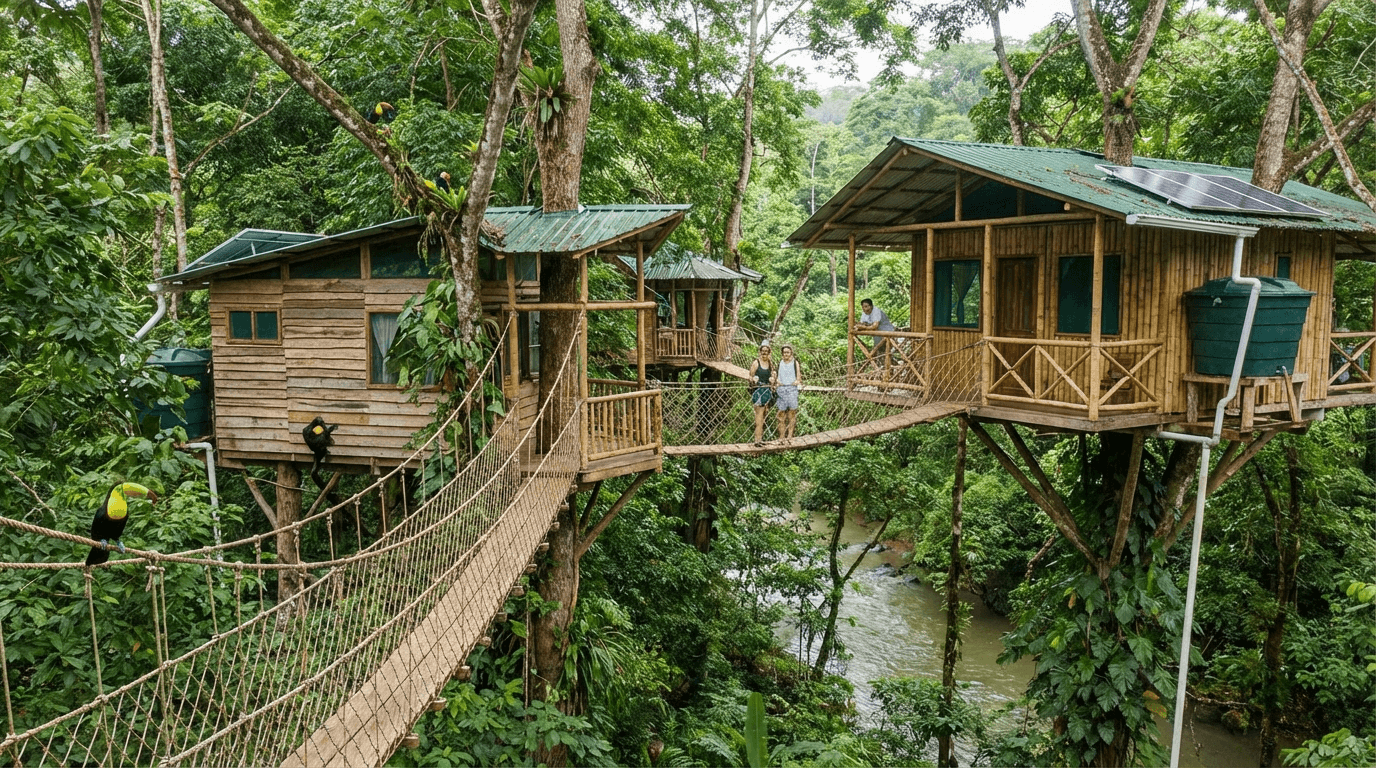
Sustainability practices: All structures are built from local bamboo and reclaimed wood. Rainwater harvesting covers most of the lodge's water needs, and composting toilets are standard throughout. Revenue directly funds on-site ethnobotanical research.
Best activities: Guided tours of Semuc Champey, river tubing through limestone caves, medicinal plant workshops, and hiking in the Candelaria Caves system.
How to get there: From Guatemala City, take a shuttle or bus to Cobán (~4 hrs), then continue to Lanquín (~2 hrs). The lodge arranges pickup from Lanquín town.
3. Tranquilo Bay Eco-Adventure Lodge — Panama
Location: Bastimentos Island, Bocas del Toro, Panama
Price Range: $200–$350 per person per night (all-inclusive)
Set on its own private beach on Bastimentos Island inside the Bastimentos National Marine Park, Tranquilo Bay is a family-owned lodge that has been quietly doing conservation right for over two decades. Only 14 guests are accommodated at any time, keeping the footprint minimal and the experience intimate.
Sustainability practices: The lodge uses solar power and maintains a strict no-single-use-plastic policy. It runs its own sea turtle monitoring program and employs local Ngäbe-Buglé indigenous guides exclusively for wildlife tours. Guests can participate in active conservation research.
Best activities: Snorkeling in pristine coral gardens, kayaking through mangroves, sloth and poison dart frog spotting, night turtle nesting walks (seasonal), and sport fishing.
How to get there: Fly into Bocas del Toro (BOC) from Panama City (~1 hr). The lodge picks guests up by boat from Bocas Town (~20 min).
4. Hamanasi Adventure and Dive Resort — Belize
Location: Hopkins, Stann Creek District, Belize
Price Range: $250–$500 per night
Hamanasi sits at the intersection of the Mesoamerican Barrier Reef and the Maya Mountains — meaning guests can dive world-class coral in the morning and hike jungle ruins in the afternoon. The beachfront treehouse bungalows and garden villas are built from sustainably harvested hardwoods and are among the most beautiful in the region.
Sustainability practices: Hamanasi holds a Gold Standard certification from the Belize Tourism Board and has planted over 3,000 trees on its grounds. It operates its own reverse osmosis water system and generates a significant portion of its energy from solar panels. The resort actively supports the Hopkins Village community with employment and educational scholarships.
Best activities: Scuba diving at the Belize Barrier Reef and Blue Hole, kayaking, zip-lining in Cockscomb Basin, and exploring Mayan ruins at Caracol or Xunantunich.
How to get there: Fly into Belize City (BZE), then take a shuttle south to Hopkins (~3 hrs), or catch a domestic flight to Dangriga (~30 min) and arrange a shorter transfer.
5. Indura Beach & Golf Resort Eco-Wing — Honduras
Location: Tela Bay, Atlántida, Honduras
Price Range: $150–$280 per night
While Indura is a larger resort, its eco-wing cabanas sit adjacent to the Jeanette Kawas National Park — one of Honduras's most important protected wetlands — and are operated under strict ecological guidelines. The park shelters manatees, jaguars, and hundreds of migratory bird species.
Sustainability practices: The eco-wing uses greywater recycling, solar water heating, and locally sourced organic produce in its restaurant. The resort collaborates with the Garífuna communities of Miami Village and Tornabé on cultural tourism programs that keep revenue in local hands.
Best activities: Boat tours into Punta Sal lagoon to spot manatees and caimans, kayaking through mangroves, Garífuna drumming and cooking classes, and snorkeling off the resort's private beach.
How to get there: Fly into San Pedro Sula (SAP), then drive or take a shuttle west to Tela (~1.5 hrs). The resort offers airport transfers.
6. Miraflor Reserve Ecolodge — Nicaragua
Location: Miraflor Nature Reserve, near Estelí, Nicaragua
Price Range: $30–$60 per night (homestay-style)
Miraflor is one of Central America's best-kept secrets — a community-managed nature reserve in the northern highlands where cooperatives of local families host travelers in modest but authentic eco-lodges and homestays. The reserve spans cloud forest, dry forest, and wetlands across 5,674 hectares.
Sustainability practices: Every lodge is locally owned and operated. The reserve is governed by a farmers' cooperative (UNION DE COOPERATIVAS), and 100% of tourism income stays within the community. Traditional organic farming practices are used on all food-producing land.
Best activities: Orchid spotting (over 300 species), horse riding through highland farms, visiting waterfalls, birdwatching for quetzals and emerald toucanets, and learning about Sandinista history from local elders.
How to get there: From Managua, take a bus north to Estelí (~2.5 hrs), then arrange a local taxi or shuttle to the reserve entrance (~30 min). Lodge coordinators will meet you there.
7. Suyapa Beach Eco-Hotel — El Salvador
Location: El Cuco, San Miguel Department, El Salvador
Price Range: $70–$120 per night
El Salvador's Pacific coast doesn't get the attention it deserves, and Suyapa Beach is helping change that. This small eco-hotel sits on a quiet stretch of black-sand beach near El Cuco, surrounded by mangrove estuary on one side and consistent surf breaks on the other.
Sustainability practices: The hotel is built from local volcanic stone and recycled driftwood. It participates in the national sea turtle conservation program, hosting nighttime patrols during nesting season (July–November). All meals feature locally caught seafood and produce from the hotel's organic garden.
Best activities: Surfing (intermediate to advanced breaks nearby), mangrove estuary kayaking, sea turtle patrols, fishing with local crews, and day trips to the Laguna El Jocotal bird sanctuary.
How to get there: From San Salvador, drive east on the CA-1 highway to San Miguel (~2.5 hrs), then south to El Cuco (~1 hr). Shuttle services are available from San Salvador most days.
8. La Tigra Rainforest Lodge — Honduras (Cloud Forest)
Location: La Tigra National Park, near Tegucigalpa, Honduras
Price Range: $90–$160 per night
Just 22 kilometers from Honduras's capital, La Tigra National Park protects Central America's oldest cloud forest reserve — and this small lodge sits right at the park's entrance at 2,200 meters elevation. It's an accessible escape from the city and one of the few places where you can genuinely feel like you've stepped into another world within an hour of landing.
Sustainability practices: The lodge was built and is managed by a local cooperative with funding from the Honduran government's eco-tourism fund. Heating is provided by wood-burning stoves using only fallen timber, and meals are cooked over traditional fogones (wood stoves) using locally grown vegetables.
Best activities: Cloud forest hiking on 50+ km of marked trails, resplendent quetzal spotting, orchid photography, and exploring abandoned silver mining camps from the colonial era.
How to get there: From Tegucigalpa's Toncontín Airport (TGU), hire a taxi or rent a car to the village of Jutiapa (~1.5 hrs), then walk or drive the final stretch to the park entrance.
9. Finca El Cisne Eco-Lodge — Honduras (Coffee Region)
Location: Near Santa Bárbara, Honduras
Price Range: $100–$180 per night (includes farm tours and meals)
Honduras is one of the world's top coffee producers, and Finca El Cisne offers an immersive stay on a working organic coffee and cardamom farm nestled in the mountains above Santa Bárbara. The colonial farmhouse has been converted into a charming lodge with six rooms, a wood-fired sauna, and sweeping views of the highlands.
Sustainability practices: The farm has held organic certification for over 15 years. It uses integrated pest management, nitrogen-fixing shade trees, and wet-milling waste is fully composted. Guests are encouraged to participate in harvest activities during peak season (November–February).
Best activities: Coffee farm tours from seed to cup, hiking to local waterfalls, horseback riding through the mountains, visiting indigenous Lenca villages, and bird watching for highland endemics.
How to get there: Fly into San Pedro Sula (SAP), drive south toward Santa Bárbara (~2 hrs), then follow the lodge's directions into the mountains. 4WD recommended in rainy season.
10. Copán Ruinas Eco-Lodge — Honduras / Guatemala Border
Location: Copán Ruinas, Copán Department, Honduras
Price Range: $60–$110 per night
We close with a lodge that puts cultural heritage alongside ecological responsibility. Situated minutes from the UNESCO World Heritage Mayan ruins of Copán, this small eco-lodge combines sustainable construction with programming deeply tied to the local Maya Ch'orti' community. It's a perfect base for travelers crossing between Honduras and Guatemala.
Sustainability practices: The lodge uses solar panels for hot water and electricity, and its restaurant sources exclusively from nearby smallholder farms. A percentage of every booking funds the restoration of the Copán archaeological buffer zone's native tree cover.
Best activities: Sunrise tours of the Copán ruins (before the crowds), birdwatching in the adjacent forest (scarlet macaws are frequently spotted), hiking to the Enchanted Wings Butterfly House, and learning about Ch'orti' weaving and ceramics from artisan cooperatives.
How to get there: From Guatemala City, take a shuttle to the Guatemalan border town of El Florido (~4.5 hrs via Chiquimula), cross into Honduras, and continue to Copán Ruinas (~15 min). Shuttles also run direct from Antigua Guatemala.
Tips for Sustainable Travel in Central America
Booking an eco-lodge is a great start, but sustainable travel is a mindset that extends through your whole trip:
- Travel slow. Fewer flights, longer stays. The carbon math — and the experience — is better.
- Eat local. Skip the hotel breakfast buffet of imported cereal and ask for gallo pinto, eggs, and local fruit instead.
- Hire local guides. Certified local naturalist guides deliver better experiences and keep money in the communities that protect these ecosystems.
- Carry a refillable water bottle. Most eco-lodges provide purified water. Single-use plastic is a genuine problem across the region.
- Respect wildlife. Admire at a distance. Never feed animals or buy products made from wildlife.
Central America rewards travelers who move thoughtfully. The jungles are thick, the reefs are still breathing, and the communities that protect these places are extraordinarily generous hosts. Choose well, spend wisely, and the region will give back far more than it takes.
Looking for more inspiration? Explore our destination guides for Costa Rica, Guatemala, Belize, Panama, Honduras, Nicaragua, and El Salvador.

About the Author
Hotels CA TeamEditorial Research Team
Hotels CA Team is the editorial desk behind these Central America hotel and travel guides. We research public property information, official sources, and traveler feedback. A hotel page is not a personal visit unless the article says so.