Central America vs Southeast Asia: Which is Better for Budget Travel?
Honest comparison of budget travel in Central America vs Southeast Asia — costs, safety, food, beaches, and what each region does better. Which should you choose for your trip?

Table of Contents
This is one of the most common questions in travel forums, and honestly, most of the answers I've seen are frustratingly vague. "Both are great!" is technically true but completely useless if you're trying to decide where to spend your three months of saved vacation days.
I've spent significant time in both regions — six months backpacking Southeast Asia starting in 2019, and the last three years living in and moving through Central America. Here's my honest, specific comparison.
The Short Answer
Southeast Asia wins on: Absolute lowest costs, food variety, infrastructure for tourists, ease of solo female travel, and sheer volume of things to see.
Central America wins on: Biodiversity, proximity to North America, authentic cultural experiences, adventure sports, and the feeling of being somewhere most travelers haven't fully discovered yet.
If you're on the tightest possible budget and want the most established backpacker trail, choose Southeast Asia. If you want adventure, wildlife, and a destination that still rewards the traveler who goes a bit deeper, choose Central America.
Now let's get specific.
Daily Costs: The Numbers
Southeast Asia
A careful budget traveler in Southeast Asia can manage on $25–40/day in cheaper countries (Cambodia, Vietnam, Laos) and $40–60/day in more developed spots (Thailand, Bali). This includes accommodation, food, local transport, and some activities.
- Dorm bed in Bangkok: $8–12/night
- Street meal in Hanoi: $1–2
- Motorbike rental in Bali: $5–8/day
- Beer in Cambodia: $0.50
Central America
Central America is not as cheap as Southeast Asia. Budget $45–70/day for a comfortable backpacker experience. Nicaragua and Guatemala are cheapest; Costa Rica and Panama are significantly more expensive.
- Hostel dorm in Antigua, Guatemala: $12–18/night
- Comida corrida (set lunch) in Nicaragua: $3–4
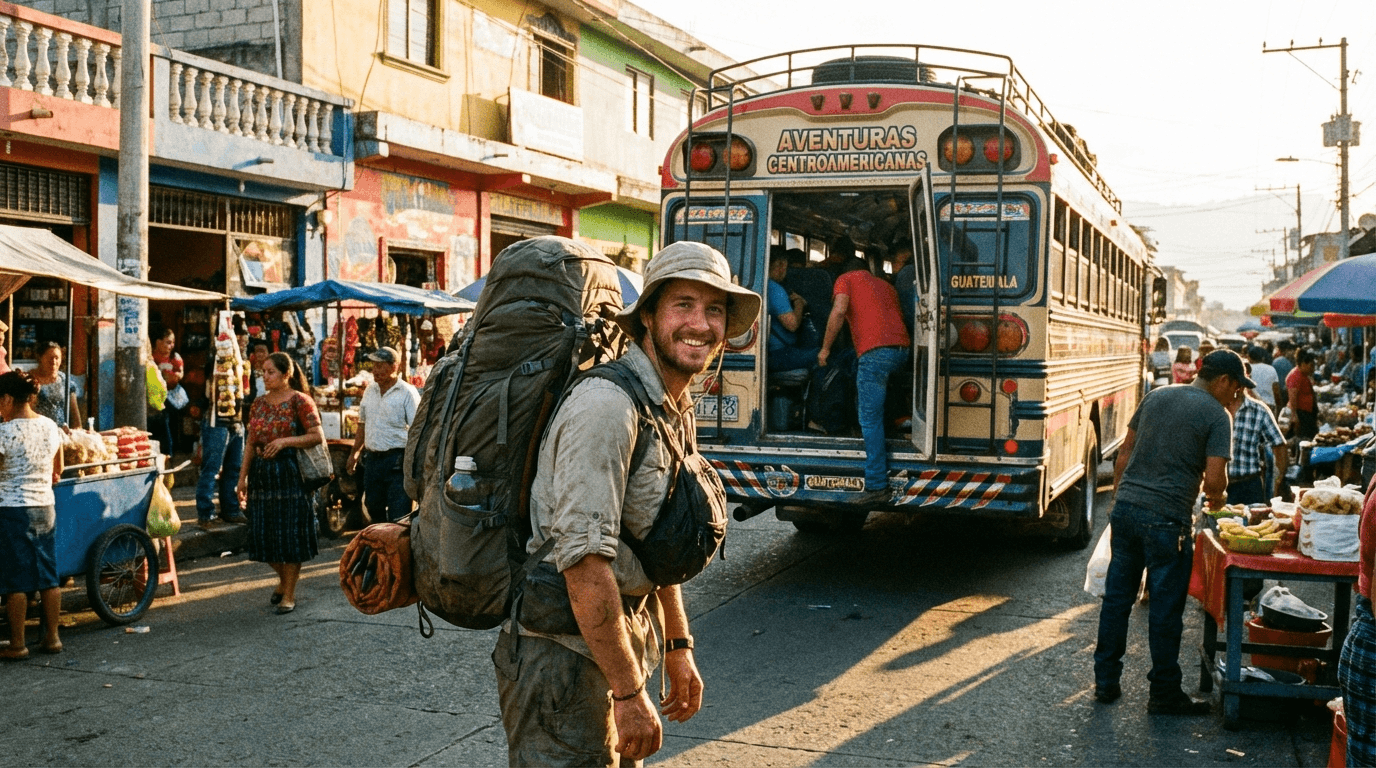
- Chicken bus across Guatemala: $2–5
- Beer in Honduras: $1.50–2
Verdict: Southeast Asia is cheaper, especially at the very low end. Central America offers better value than most people expect, but it's not dirt cheap.
For the cheapest Central American country on this list, Nicaragua, read the Nicaragua budget guide. It has daily costs by travel style and current exchange rates.
Food
Southeast Asia
The food in Southeast Asia is, without exaggeration, some of the best in the world. Thai, Vietnamese, Indonesian, and Khmer cuisines are complex, varied, and available on every street corner at absurd prices. A bowl of pho in Hanoi costs less than a cup of coffee at home and tastes transcendent.
Vegetarians and vegans are particularly well-served in Southeast Asia — Buddhist culinary traditions mean plant-based options are everywhere.
Central America
Central American food is hearty, filling, and genuinely delicious — but it's less complex and varied than Southeast Asian cuisine. The cornerstone of every meal is rice and beans (called gallo pinto in Costa Rica and Nicaragua, casado in Costa Rica, or frijoles y arroz elsewhere). Add grilled meat, plantains, fresh tortillas, and you have the regional meal pattern.
What Central America does exceptionally well: fresh tropical fruit, excellent coffee (especially Guatemalan and Costa Rican), seafood on the coasts, and the specific cuisine of each country (pupusas in El Salvador, tapado in Guatemala's Caribbean coast, rondon in Nicaragua).
Verdict: Southeast Asia wins on food variety and price. Central America wins on coffee (not even close — Guatemalan coffee is world-class) and Pacific seafood.
Beaches
Southeast Asia
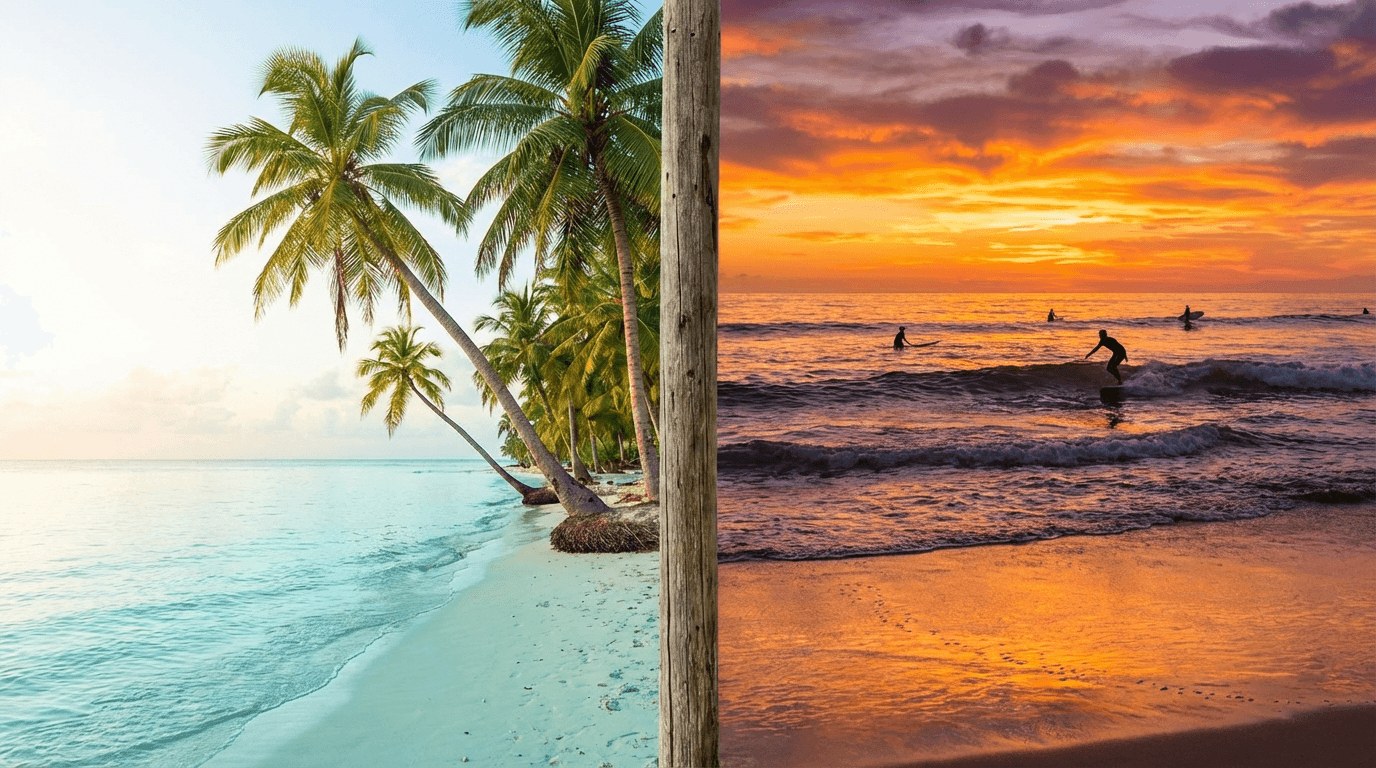
Thailand's islands (Koh Lanta, Koh Tao, the Phi Phi islands), Bali's surf beaches, the Philippines' hundreds of extraordinary islands, Vietnam's coastline — Southeast Asia has some of the world's most famous beaches, and they're famous for good reason. Turquoise water, white sand, excellent snorkeling.
The downside: the most famous beaches are absolutely packed, and the infrastructure has degraded some of the natural beauty (looking at you, Koh Phi Phi main beach).
Central America
Central America has both a Pacific and Caribbean coast. The Pacific side has big surf, dramatic scenery, and less developed beaches — Playa Maderas in Nicaragua, El Tunco in El Salvador, and the Nicoya Peninsula in Costa Rica are highlights. The Caribbean side — especially Belize, the Bay Islands of Honduras, and Costa Rica's southern Caribbean — has turquoise water and excellent diving.
What Central America lacks: true postcard-perfect beach towns that function at scale. The infrastructure is thinner. The reward is that you can still find gorgeous beaches with almost no one on them.
Verdict: Southeast Asia has more famous beaches. Central America has more empty ones.
Wildlife and Nature
This is where Central America wins decisively and it's not even close.
Central America contains approximately 7% of the world's biodiversity in just 0.5% of the Earth's land area. The region has more species of birds than all of North America. In Costa Rica alone, you'll see more wildlife per square kilometer than almost anywhere else on Earth — sloths, poison dart frogs, resplendent quetzals, sea turtles, jaguars (if you're lucky), and four species of monkeys.
Costa Rica's national parks protect over 25% of the country's land area. Guatemala's cloud forests around Quetzaltenango and the Maya Biosphere Reserve in Petén are extraordinary. Belize has the second-largest coral reef in the world.
Southeast Asia has incredible wildlife too — orangutans in Borneo, elephants in Thailand, komodo dragons in Indonesia — but you often have to work harder and travel further to see it genuinely wild rather than in tourist-oriented sanctuaries.
Verdict: Central America wins, especially for birdwatchers and wildlife enthusiasts.
Safety
This requires honesty, not cheerleading.
Southeast Asia
Southeast Asia is generally quite safe for tourists. Petty theft exists (bag snatching on motorbikes is common in some cities), but violent crime targeting tourists is rare. Solo female travelers generally report feeling safe in most of the region, with some caution advised for nightlife situations.
Central America
Central America has a more complicated reputation, and some of it is deserved. Honduras, El Salvador, and Guatemala have historically had high homicide rates — though the situation has improved dramatically in El Salvador in particular since 2022, which has become one of the safer countries in the region.
The honest truth is: tourist zones in Central America are generally safe. The violence that affects local communities is largely gang-related and doesn't typically target foreign travelers. However, there are areas and situations to avoid — late-night travel on certain roads, specific neighborhoods in larger cities, and displaying expensive electronics.
Costa Rica and Panama are genuinely safe by global standards, comparable to parts of Southeast Asia.
Verdict: Southeast Asia has fewer safety concerns for the average traveler. Central America is safe if you're informed and sensible — but it requires more awareness.
Getting Around
Southeast Asia
Getting around Southeast Asia is extremely well-developed for backpackers. Overnight buses between major cities, affordable internal flights, extensive train networks (especially in Vietnam and Thailand), and ubiquitous ride-hailing apps (Grab) make independent travel easy.
Central America
Transportation in Central America is more adventurous. Chicken buses (converted US school buses) connect most towns cheaply but slowly. Shuttle buses for tourists are available between major backpacker destinations. Rental cars are practical for Costa Rica and Panama. Public buses are functional but not comfortable on long routes.
There's no regional rail system. Flying between countries is possible but expensive — a flight from Guatemala City to San José can cost $150–250.
Verdict: Southeast Asia is dramatically easier to navigate. Central America requires more planning and patience.
The Cultural Experience
Both regions have extraordinary cultures, but they're different types of experience.
Southeast Asia has a well-worn tourist trail. This makes things easy, but it also means many "authentic" experiences are curated for consumption. The backpacker infrastructure is so established that you can move through it without really engaging with local life.
Central America is less polished. Your interactions with locals are more likely to be genuinely unscripted. The Maya culture alive in Guatemala's highlands, the Afro-Caribbean culture of Honduras's Bay Islands, the indigenous communities of Panama's Darién — these are living cultures that tourism hasn't yet fully processed and packaged.
Verdict: Subjective, but I find Central America more genuinely surprising. Southeast Asia is more consistently comfortable.
Who Should Choose Central America?
- Travelers from North America (Guatemala City is 2 hours from Miami; it beats a 20-hour flight to Bangkok)
- Hikers, surfers, and outdoor adventurers
- Birdwatchers and wildlife enthusiasts
- People who want to explore somewhere less documented and less crowded
- Coffee obsessives
- Anyone who wants to learn Spanish (English is much less common than in SEA)
Who Should Choose Southeast Asia?
- First-time backpackers who want established infrastructure
- Budget travelers at the absolute cheapest end
- Food obsessives
- Beach lovers who want postcard-perfect conditions
- Travelers who want the widest possible variety in one region
Final Verdict
There's no wrong choice. They're different experiences that appeal to different travelers. But if someone put a gun to my head and said "pick one for a three-month budget trip," I'd say:
First trip, new to backpacking? → Southeast Asia. The infrastructure will save you from rookie mistakes.
Second or third trip, want something that still surprises you? → Central America. You'll work harder for it, but what you'll find is something genuinely your own.
And honestly? Do both. They're both extraordinary, and the world is big enough.
Browse our Central America hotel guides by country to start planning your trip.

About the Author
Hotels CA TeamEditorial Research Team
Hotels CA Team is the editorial desk behind these Central America hotel and travel guides. We research public property information, official sources, and traveler feedback. A hotel page is not a personal visit unless the article says so.