First Time in Guatemala: A Complete Travel Guide for 2026
Everything first-time visitors need to know about Guatemala in 2026: safety, budget, top destinations, transport, food, and where to stay.
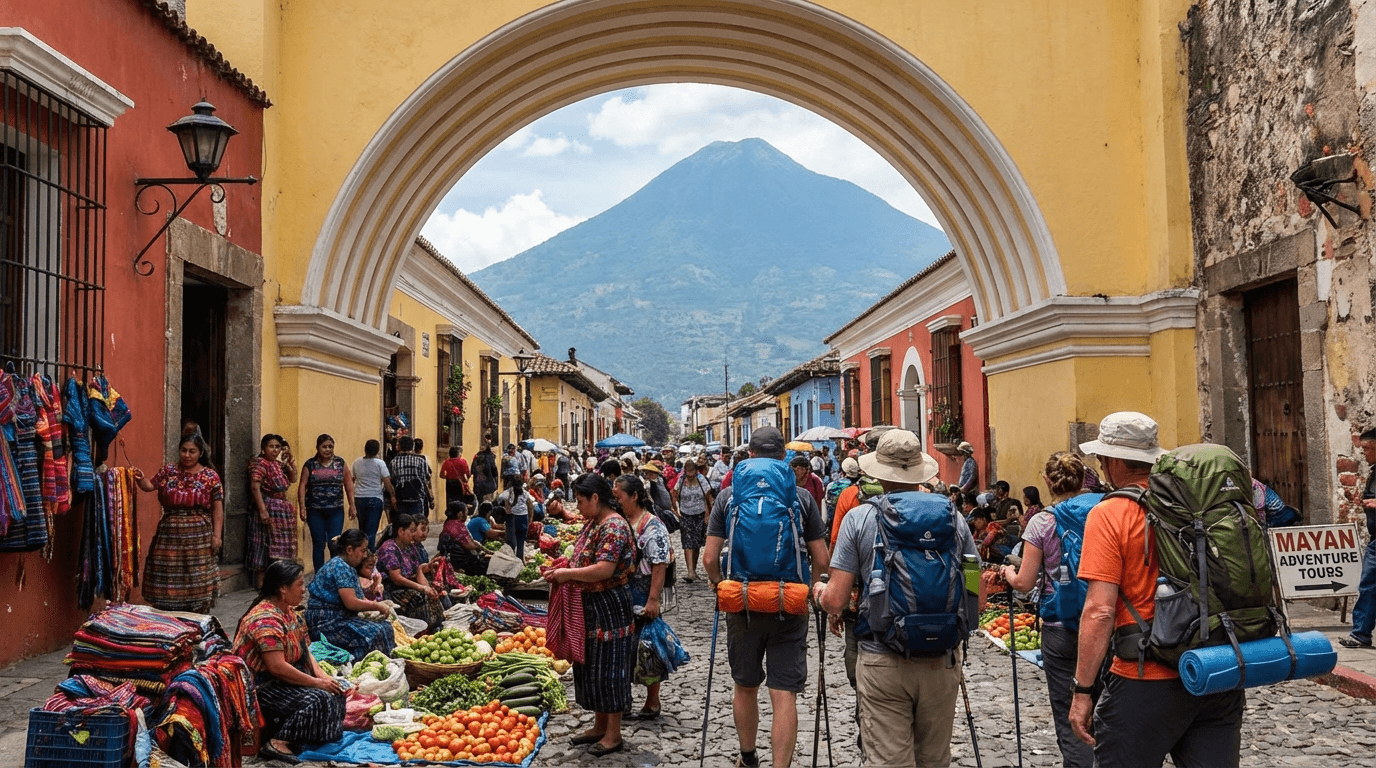
Table of Contents
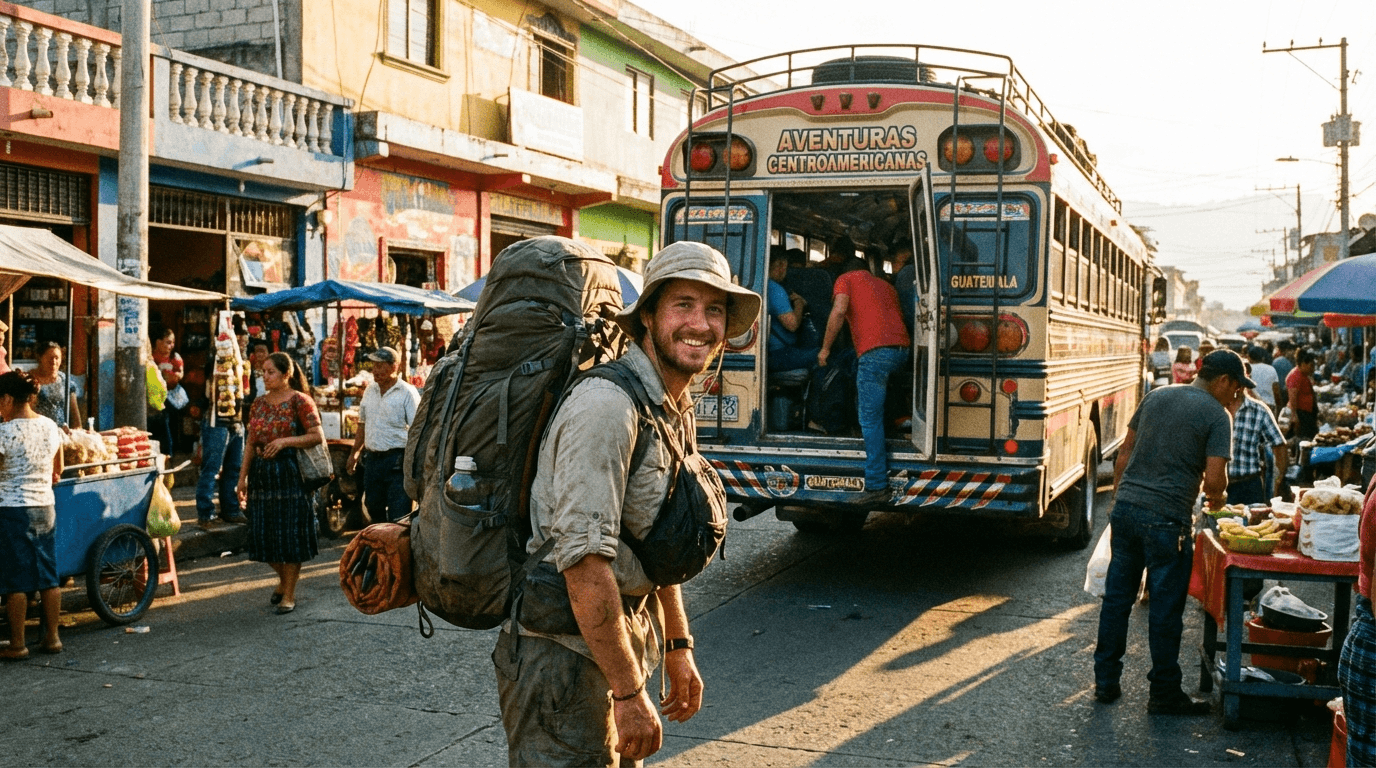
Guatemala doesn't ease you in gently. From the moment you land in Guatemala City or step off a chicken bus in Antigua, this country hits you with color, chaos, and something deeply, unmistakably alive. Volcanoes ring cobblestone colonial towns. Markets overflow with hand-woven textiles in every shade imaginable. Lake Atitlán sits impossibly blue between three towering peaks. And the food — smoky black beans, fresh tortillas, and pepián stew that takes all day to make — is some of the most underrated cooking in Latin America.
If you're planning your first trip to Guatemala in 2026, this guide covers everything: safety realities, daily budgets, the destinations worth your time, how to get around, and where to sleep.
Is Guatemala Safe for First-Time Travelers?
Honestly? Yes, with caveats. Guatemala has a complicated safety reputation, some of it deserved, much of it outdated or overstated for tourist areas. Millions of travelers visit every year without incident. The key is understanding where the risks are concentrated.
Guatemala City (Zone 1 and Zone 18) has real crime problems and most visitors wisely skip it or pass through only to catch a connection. If you arrive at La Aurora International Airport, take an authorized airport taxi (fixed fares, around $15–$20 to the city center) or book a shuttle directly to Antigua. Step-by-step immigration, Uber pickup, and Antigua transfer ranges are in the La Aurora arrival guide.
Tourist zones — Antigua, Lake Atitlán, Semuc Champey, Flores — are genuinely safe for tourists practicing basic precautions: don't walk around at night with expensive gear visible, keep a copy of your passport, don't take unofficial taxis.
Pickpocketing is the most common issue. Markets and crowded buses are prime spots. Use a money belt or hidden pouch. Keep your phone in a front pocket.
Solo female travelers do visit Guatemala regularly and report positive experiences, especially in Antigua and Atitlán. Night travel on public buses is best avoided. Shuttle services between tourist towns are the safer choice after dark.
The US State Department rates Guatemala as Level 2 (Exercise Increased Caution), the same rating as France and Germany. Take that as a baseline, not a deterrent.
Guatemala Travel Budget for 2026
Guatemala is one of the most affordable countries in Central America.
Budget traveler: $30–$45/day (dorm beds, local food, public transport) Mid-range traveler: $60–$100/day (private rooms, restaurants, some tours) Comfort traveler: $120–$200+/day (boutique hotels, private drivers, guided excursions)
Key costs to know:
- Dorm bed in Antigua: $8–$15/night
- Private room in a mid-range Antigua hotel: $40–$80/night
- Meal at a local comedor: $2–$4
- Sit-down restaurant dinner: $8–$20
- Chicken bus ride (local): $0.50–$3
- Shuttle between tourist towns: $10–$25
- Volcano hike with guide: $15–$40
- Lake Atitlán boat taxi: $2–$5 per crossing
The Guatemalan Quetzal (GTQ) is pegged loosely near 7.7–8 GTQ to 1 USD. ATMs in tourist areas are widely available. Withdraw larger amounts to avoid multiple fees — typical ATM fee is $3–$5 per transaction.
Top Destinations in Guatemala
Antigua Guatemala
The colonial crown jewel. Antigua sits at 1,530 meters surrounded by three volcanoes — Agua, Fuego, and Acatenango — and its pastel facades and cobblestone streets are UNESCO World Heritage protected. This is where most first-timers land, and for good reason: the infrastructure for tourism is excellent, there are Spanish schools everywhere (many visitors do a week of lessons), and the food and coffee scene is genuinely world-class.
Don't miss: Café No Sé for mezcal and atmosphere, the Mercado de Artesanías for textiles, and a sunrise hike up Volcán Acatenango ($35–$55 with guide) to watch Volcán Fuego erupt at dawn. It's one of the most dramatic experiences in Central America. For centro vs finca vs quieter edge, use the Antigua where-to-stay breakdown.
Lake Atitlán
About 3 hours from Antigua by shuttle ($15–$20), Lake Atitlán is a caldera lake ringed by 12 indigenous Mayan villages and three volcanoes. Each village has its own personality:
- Panajachel — tourist hub, good infrastructure, ATMs, restaurants
- San Marcos La Laguna — yoga retreats, meditation centers, hippie vibes
- Santiago Atitlán — most traditional, home of Maximón deity
- San Juan La Laguna — artisan cooperatives, quieter, authentic
Base yourself in San Pedro La Laguna or San Marcos for a few nights. Boat taxis run all day between villages ($2–$5). The lake is best experienced slowly — rent a kayak, hire a local guide, sit with a coffee watching the clouds burn off the volcanoes in the morning. Village-first comparison (Pana, San Pedro, San Marcos, Santa Cruz, Santa Catarina) is in the Atitlán stay guide. Country snapshot: Guatemala hub.
Semuc Champey
This one requires effort — it's a roughly 8-hour journey from Antigua via shuttle through the mountains — but Semuc Champey is genuinely stunning. Natural limestone pools in graduated turquoise colors cascade above the Cahabón River. You can swim, slide between pools, and tube down the river below. The surrounding jungle is thick and loud.
Stay in El Portal or Greengo's hostel nearby ($10–$20/dorm). Tour packages including transport from Lanquín run $15–$25 and include cave exploration with candles.
Flores and Tikal
In the Petén jungle in northern Guatemala, Flores is a tiny island town connected to the mainland by a causeway. It's the base for visiting Tikal, the most impressive Maya archaeological site in Central America and arguably the hemisphere. The massive Temple IV offers views above the jungle canopy that have appeared in films and countless bucket lists.
Arrive at Tikal for sunrise ($25 park entrance + $12 guide) — howler monkeys wake you and mist hangs between the temples. Organized tours from Flores run $30–$60 including transport.
Chichicastenango Market
Every Thursday and Sunday, the highland town of Chichicastenango transforms into one of the largest and most authentic indigenous markets in the Americas. Vendors sell textiles, pottery, medicinal herbs, live chickens, and handicrafts. The Mayan Catholic fusion at Iglesia de Santo Tomás — incense burning on the church steps, flower offerings, street processions — is unlike anything else in Guatemala.
Getting Around Guatemala
Chicken buses (repurposed old US school buses) are the authentic local experience and the cheapest option ($0.50–$3). They're colorful, crowded, and generally fine for daytime travel on main routes.
Shuttle services are the practical choice for tourists moving between Antigua, Atitlán, Lanquín, Flores, and the border. Companies like Adrenalina Tours and San Juan Travel offer door-to-door shuttles for $10–$30 depending on distance. Book through your hostel.
Renting a car is possible but only recommended for experienced drivers comfortable with mountain roads and local driving culture. A 4WD is essential for many rural routes.
Domestic flights: TAG Airlines connects Guatemala City to Flores (for Tikal). Fares run $80–$150 one-way. Worth it if you're short on time.
Guatemalan Culture and Etiquette
Guatemala's population is roughly 40% indigenous Maya — one of the highest indigenous populations proportionally in Latin America — and this shapes the country profoundly. Respect in indigenous communities matters.
- Photography: Always ask before photographing people, especially in markets and ceremonies. A simple "¿Puedo tomar una foto?" goes a long way.
- Dress codes: Cover shoulders and knees when entering churches. In San Francisco El Alto and other highland villages, modest dress shows respect.
- Language: Spanish is official, but in highland villages many people speak Kiche, Mam, or other Mayan languages as their first language. A few words of Spanish go a long way.
- Bargaining: Expected at markets, not at restaurants or hotels with posted prices.
Guatemalan Food: What to Eat
Pepián — a rich stew of chicken or pork in a sauce of toasted pumpkin seeds, chilies, and tomatoes. National dish territory. Try it at El Cuartito in Antigua or any traditional comedor in Chichicastenango.
Kak'ik — a turkey soup from Alta Verapaz with chile and herbs. Best found in Cobán or Carcha.
Rellenitos — mashed plantain stuffed with sweetened black beans and fried. Street food heaven, $0.25–$0.50 each.
Tamales colorados — different from Mexican tamales, these are wrapped in banana leaves with a tomato-based sauce. Weekend street food, $1–$2 each.
Guatemalan coffee — some of the world's best. Antigua and Huehuetenango regions produce exceptional single-origin beans. A cappuccino in a cafe runs $2–$4; a bag of quality beans for gifts, $8–$15. Overnight finca stays and harvest-season timing are in the coffee hotels guide.
Where to Stay in Guatemala
Antigua:
- Budget: Jungle Party Hostel ($10–$15/dorm), great social atmosphere
- Mid-range: Hotel La Merced ($50–$70/night), colonial building, rooftop views
- Luxury: Casa Santo Domingo ($150–$250/night), converted monastery, stunning
Lake Atitlán (San Pedro):
- Budget: Zoola ($8–$12/dorm), lakefront hammocks, social
- Mid-range: Casa Elena ($45–$65), family-run, great breakfast
Flores:
- La Casa de la Iguana ($12/dorm, $40 private) — friendly, good location on the island
Practical Information
Visa: Most nationalities including US, EU, and UK citizens get 90 days on arrival, no visa required. Guatemala, Honduras, El Salvador, and Nicaragua share the CA-4 agreement — your 90 days counts across all four.
Health: No required vaccinations, but hepatitis A and typhoid are recommended. Drink bottled or filtered water. Altitude sickness can affect visitors in the highlands — ascend slowly.
Electricity: 120V, US-style flat-pin outlets.
SIM card: Pick up a Tigo or Claro SIM at the airport or any pharmacy. Data packages run $5–$10 for 3–5GB.
Best time to visit: November through April is dry season and peak tourism. May through October is rainy season — afternoons bring rain but mornings are often clear, and prices drop 20–30%.
Guatemala will challenge you, move you, and — if you let it — completely recalibrate what you thought travel was supposed to feel like. Come with flexibility, a little Spanish, and an open stomach. If this is the first week of a longer isthmus trip, switch to the 2026 backpacking route.

About the Author
Hotels CA TeamEditorial Research Team
Hotels CA Team is the editorial desk behind these Central America hotel and travel guides. We research public property information, official sources, and traveler feedback. A hotel page is not a personal visit unless the article says so.